
Qingming Festival
A Chinese holiday honoring our ancestors + tribute to my grandmother

Today is the Qingming Festival, 清明節, a holiday when we pay our respects to our ancestors by cleaning their gravesites and giving them ritual offerings. Every year, my family visits my paternal grandmother’s grave, usually before the actual day of the Qingming Festival. My mom hasn’t given me a good explanation as to why this timing matters, other than that’s just what Toisan people do traditionally.
Because my grandmother was Christian, we don’t burn incense or joss papers when we visit her grave. However, we do bring food and fresh flowers as part of our offering. My grandmother had a sweet tooth and loved foods that were easy on her dentures, so we usually bring soft and sweet snacks, such as my mom’s sponge cake and sweet rice cakes with red bean paste. Offering hard-boiled eggs is another Toisan tradition, but again, my mom has not explained why this custom exists.
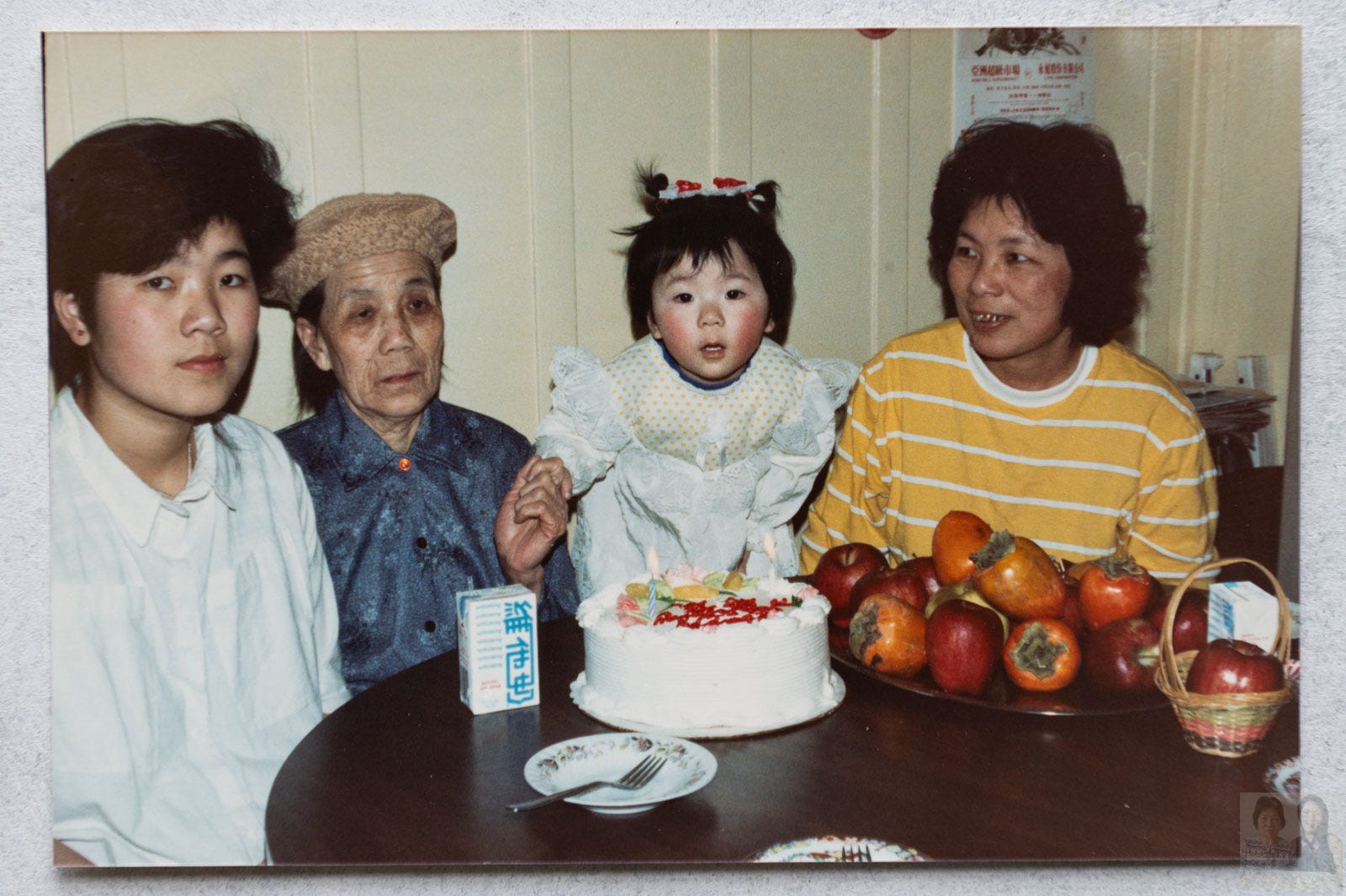
My grandmother passed away 15 years ago, but I can still hear her voice whenever I see pictures of her. She always called me “慈女, ” which is like saying “Lisa, darling” in English. No one else in my family calls me by that nickname. Because my grandmother could only understand the Toisan dialect, that’s what I used when I spoke with her. I attribute my ability to speak Toisan well because of my grandmother.
When I went back to my family’s village last year, people were impressed that despite being born in America, I’ve developed the ability to speak Toisan with their local inflection. I told them that’s all due to my grandmother raising me when I was young. In response, our neighbors reflected on how my grandmother was a very kind and generous person. That’s exactly how I remember her as well.
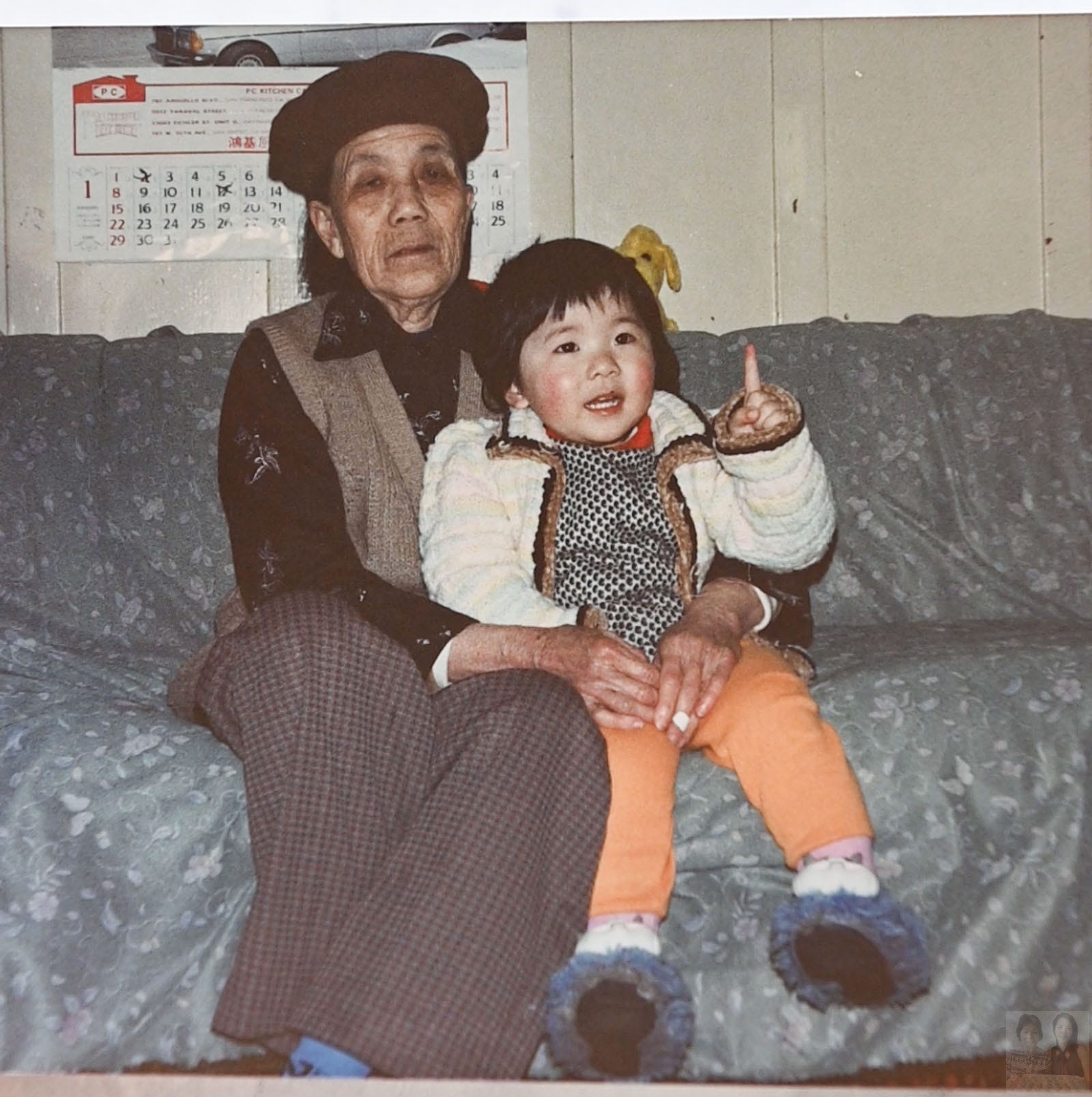
My grandmother was literate, which was not usual for female children of her generation. Growing up, I took her literacy for granted but it wasn’t until last year that I asked my family how that was possible. It turns out my great-grandfather was a businessman who earned some money after immigrating to Canada (I believe), and was able to send that money home to get my grandmother educated.
I’m suddenly recalling the time when my grandmother was studying for the U.S. citizenship exam (she was able to take it in Chinese). Every day, she sat on her wicker chair in the corner of our living room, with a packet of factoids on U.S. civics and a magnifying glass in hand. After months of studying, she started reciting the information that she learned, like how Washington was the first president, and Lincoln the sixteenth. It was impressive that she was able to learn all that at her age (early 80s)!
I’m so glad there is this annual holiday in Chinese culture that gives me an opportunity to think about and pay my respects to a woman who was so important to my upbringing.
Mini Chinese Lesson
清明節: cing ming zeet in Cantonese, tan man daat in Toisan, qing ming jie in Mandarin
paternal grandmother
阿人: a ngin, Toisan
嫲嫲: maa maa, Cantonese
correction for the Mandarin: 奶奶 (nai nai) is the more common way to say paternal grandmoter. 祖母 (zu mu) is a formal term.
maternal grandmother
阿婆: a po, Toisan
婆婆: po po, Cantonese
外婆: wai po, Mandarin
Foodnotes
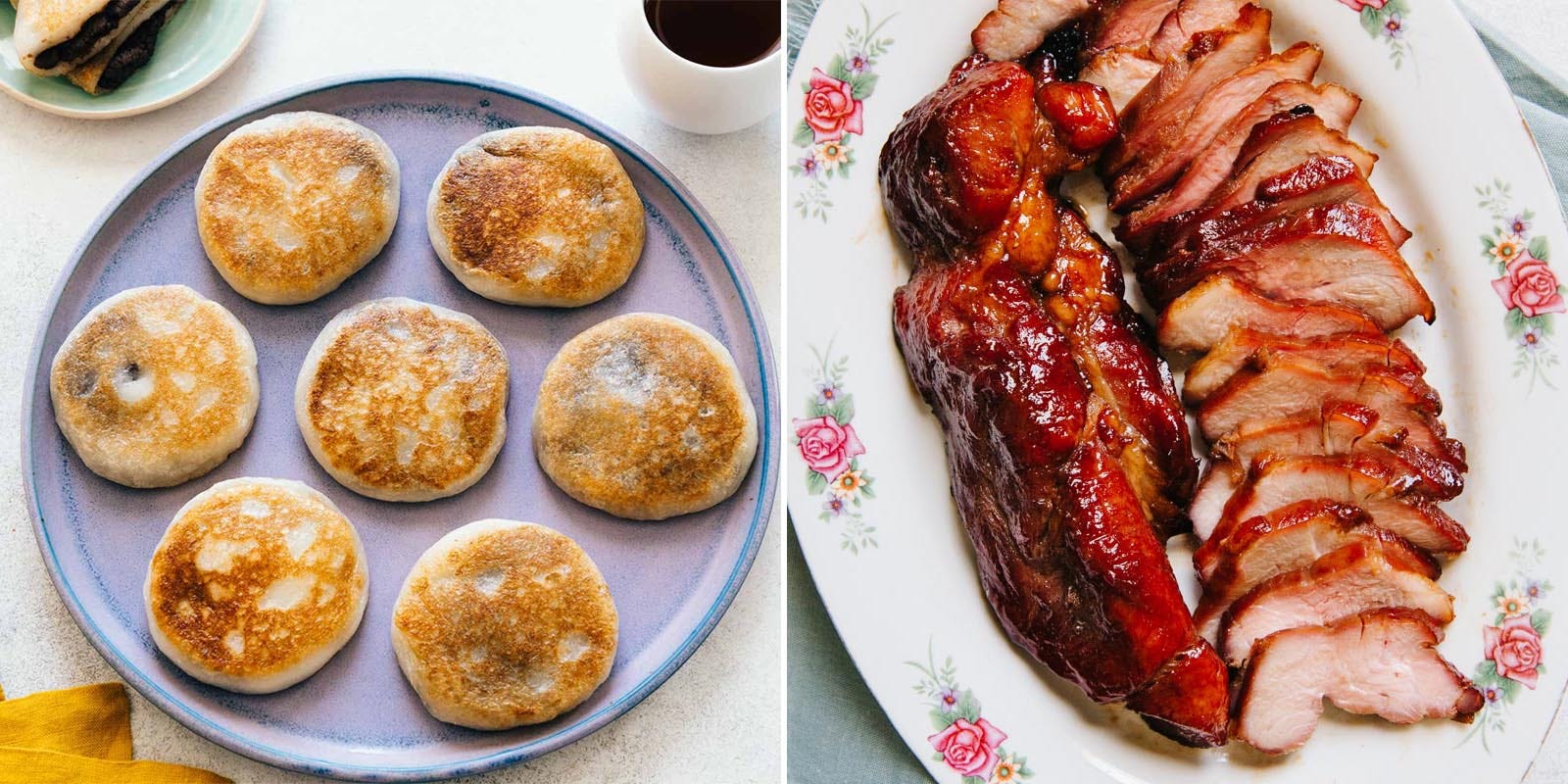
Foods my grandmother loved to eat:
Thank you for sharing this wonderful tradition. Also, love the photos of little Lisa 😊
Thank you for sharing your memories! We just did the same at the cemetery yesterday